Wednesday, December 11, 2024

The Douro Valley


We spent 5 nights in the Douro Valley at our friend´s quinta (wine estate). The Douro River starts in Spain, winds its way across northern Portugal, and empties into the Atlantic at Porto. The valley, carved by the river, is the oldest demarcated wine region in the world and a UNESCO world heritage site. While the summer weather can be quite warm, by mid-November it was crisp, and a bit overcast. It´s a beautiful area and the fall colors added to its allure.

We took the time to relax, but also explored what the region has to offer, most of which is wine-related, and we were happy to partake. The vineyards are planted on steep terraced hills, which create a wonderous scene.

We learned during this trip that Portuguese wineries have adopted a commercial approach to tastings and tours. A visit generally requires a paid-in-advance reservation with a minimum cost of 15 euros/person. Although a tour is provided, most winery tours are similar and we´ve done our fair share, so this is not our preferred model. Still, at Quinta de la Rosa we confirmed that grapes are picked by hand due to the steep terrain and learned that the grapes are crushed by foot (a la ¨I Love Lucy¨, albeit in large concrete containers). This method is better for ports and there are different rhythms and paths used during the very long shifts. The bast factoid was that your feet and legs stay stained for days!

Pinhao is one of many riverside villages. It´s train station is decorated with tiles depicting the region´s viticulture.

To get a view from the water, we took a river cruise on a traditional rabelo boat, the type historically used to transport the barrels of port wine to Porto´s Vila Nova de Gaia warehouses where the wine is aged. It was a nice way to enjoy the scenery and learn more about the history, geography, and geology of the valley.

The Douro was the perfect place to slow down. We enjoyed lunch at Aneto & Table, a winery-owned restaurant in Peso da Regua, one of the larger riverside towns in the area. There were wines paired with every dish. And we had another memorable lunch in Aramar, a small hillside village, at Regional Fonte Nova, where the owner was a truly gracious host. During our meals and tastings we reconfirmed that we prefer wine over ports. Of course, there are occasions for every type.

On our way to Porto, our last stop of this trip, we paused in the Vinho Verde region, known for its very fresh white wines. While the wines at A&D Wines-Quinta de Santa Teresa were spectacular enough to ship some home, the highlight of the tour was meeting Sal, the owner´s 8-month-old spaniel puppy. He followed us around the grounds and happily kept us company while we tasted.


You can´t find a better way to make our day than good wine and a friendly dog.

We hope to return to the Douro one day to help our friend during harvest season, perhaps even getting to stomp some grapes.

Ciao,

Shana & Jeff

Saturday, December 7, 2024

Coimbra and a Special Lunch

The drive from Nazare to our next destination in the Douro Valley was about three hours. Along the way we stopped in the university town of Coimbra and for a fantastic lunch of crispy pig.

Coimbra is a beautiful town that sits on a hill on the Mondego River. We were there on a beautiful day.

Although the place where Coimbra is has been settled sinced the Roman era, it is best known as the home of the oldest university in Portugal (technically started in Lisbon in 1290, but moved to Coimbra in 1308). After having coffee and a traditional pastel de nata at a cool old cafe, we wandered uphill through the town toward the university. Along the way, we saw a student in the traditional university cape, which supposedly inspired JK Rowling to use such capes for the students at Hogwarts (it is true that Rowling wrote some of Harry Potter in Portugal).
The main university square is quite impressive, and the entrance included information about student resistance to the Salazar dictatorship, which added to the knowledge we began to acquire at the Resistance Museum in Peniche. As you can imagine, the University was a center of protest from early in the dictatorship as students resisted moves to undermine faculty and student control of academics.  
Coimbra is a city of many churches. This was originally the Jesuit Church of the University, but later the bishopric seat was transfered here from the city's old Romanesque cathedral. So, it is now know as the "New" Cathedral even though it became the cathedral in 1772.
We did not actually spend any time touring the many churches of Coimbra, because they all charged entrance fees, which is something we don't really believe in. We've seen too many churches during our travels and honestly can't remember most of them distinctly anyways (especially the insides). As a result, we had time to get lunch at a restaurant recommended by our friends at Lisbon Winery: O Rei Dos Leitoes. 

O Rei Dos Leitoes is known for its crispy pork, so of course we had to order that, and it came with a (small) salad, and really delicious homemade potato chips. Generally, we do not get excited about potato chips, but these were fantastic, and were even served warm.

The restaurant's wine list was like a telephone book. Fortunately, Adriana at Lisbon Winery had recommended a bottle of sparkling wine to match with the pork. It was fantastic.

After lunch, I somehow managed to drive the last hour or so to our friends' finca in the Douro Valley. More on our adventures there soon.

Hasta pronto,

Jeff and Shana


Monday, December 2, 2024

Two of Portugal´s Coastal Treasures: Nazare & Peniche


Nazare had been on our ¨Travel To Do List¨ for some time. (Like most people's lists, ours is long.) I´ve read many articles about the giant waves and crazy surfers willing to test their mettle riding them. And while November is part of ¨big wave¨ season, there are no guarantees when they will occur. It takes the right kind of storm to create the precise conditions required. Thus, while we were thrilled with the sunshine and good weather during our visit, we were disappointed that we didn´t time it right.

Nazare´s geography is interesting. A large part of the city sits on a long beach below a large cliff. We took the funicular up and enjoyed the amazing views down.

On the other side of the cliff, below a fort and lighthouse, sits another beach where the giant waves crash.  It´s a beautiful walk out to the lighthouse/fort and then down to the other side, where there were body surfers on the 8–10-foot waves that tightly curled. Even in these calmconditions, you could see this is not a place for amateurs.

\\

Nazare has a laid-back vibe and the fresh fish dinners were a delight, accompanied by crisp, local white wines. The town did not seem overrun, which we appreciated.

From Nazare we took a day trip about an hour south to visit Peniche, where we did a boat tour out to Berlangas Island that included a cave tour and hike.

The isolated island archipelago served as a defensive bastion, a royal retreat and as a fishing outpost before being designated as a nature reserve. A smaller boat took us into the various nooks and crannies of the island and gave us a full view of the Sao Joan Baptiste Fort and the rocky coastal formations.


We got off at the fort to explore and to hike back to the main dock. The fort sits on an outcropping that reminded us a bit of San Juan de Gaztelugatxe.

We hiked up the 300 or so steps, which provided great perspective of the fort´s defensive position, we then followed the ridge past the lighthouse and to the bit of infrastructure on the island with a guide who provided plenty of interesting information and history.

We returned to Peniche, which is also a surfing town, but with waves that are more welcoming to the average surfer. It also has a fort, that now hosts the National Museum of Resistance and Freedom, where we learned a lot about the Salazar dictatorship and the fort´s political prisoners that were finally released in April 1974. In all our trips to Portugal, we had never focused on this part of the country´s history.

We returned to Nazare tired from a full day and glad that we had ordered too much pizza at lunch, which allowed us to enjoy leftovers with some wine we had picked up along the way. It was a very good day.

Hasta pronto,

Shana & Jeff

Tuesday, November 26, 2024

Scenic Stops Along the Way to Nazare


Although Portugal was a repeat destination, there are still plenty of places we haven’t visited (which is still true!). In planning this trip, the priority was smaller places more off the beaten track, to the extent that exists anymore considering that tourism worldwide now exceeds pre-pandemic levels. From Cascais, our next destination was Nazare. We made a day trip out of the journey stopping in Mafra and at Quinta dos Loridos. Both had worthy sights that met the criteria – there were very few tourists.

Mafra is a small town of about 80,000, which is incongruous with the size of the Mafra National Palace. Built between 1717 and 1730 in the Baroque style, the royal complex is one of the largest royal residences in Europe. Considering this was a secondary residence, its size is astonishing.

The compound includes a basilica that is a smaller version of St. Peter’s, filled with Italian sculpture and paintings, a palace, a library and a convent. There are around 1200 rooms and some 156 staircases. It was fun to watch a group of small children whose tour was led by a guide in period costume.

The number of steps taken wandering through the areas that are open to the public justified stopping in at a café for coffee and pastry afterwards.

We then continued to Quinta dos Loridos, which is a vineyard, but the 35-hectare Balcalhoa Buddha Eden Garden is the real highlight. We were glad to have a sunny day to explore the place, which has a modern and contemporary sculpture garden, an African sculpture garden, oriental art and gardens, and water features. It was a real treat.


We walked so much at both stops that we were happy to get back in the car for the ride to Nazare and were too tired for any other stops. Seeing the sunset in Nazare and fresh fish at dinner were the final reward.

Hasta pronto,

Shana & Jeff

Friday, November 22, 2024

Cascais and Lisbon Winery

We began a two-week trip to Portugal (our fourth) with a visit to our friend and former Los Angeles neighbor David in Cascais, where he has lived for the past 18 months. Cascais is a lovely little city on the coast west of Lisbon. We spent a beautiful day walking around the city, enjoying the sunshine, and taking in the fantastic views. 

And, even though we did not stay in Lisbon on this trip, being so close, we had to make another visit to Lisbon Winery (not coincidently, our fourth), especially because David is also a wine enthusiast. As has always been the case, we experienced wonderful Portuguese wines from smaller producers as part of a fantastic guided tasting. In addition, we had an amazing meat and cheese platter to accompany the wine. As always, we highly recommend a visit to Lisbon Winery (in their nice, new location) if you are in Lisbon.

Much more to come soon on our adventures touring through Portugal.

Hasta pronto,

Jeff and Shana


Sunday, November 3, 2024

A Quick Escape to Goierri aka the Basque Highlands


While we’ve lived in the Basque region for more than 7 years, there’s still a lot of exploring to be done. And little by little, as opportunities present themselves, we attempt to get to know the area better.

We spent October 19 and 20, discovering Goierri, one of the 18 districts of Gipuzkoa (the province where we live). We stayed at the Petit Hotel Goierri, located in Ormaiztegi (pop. 1226), about an hour away from San Sebastian via the Cercanias train. The train winds its way through the beautiful green hills and numerous small towns, many of which are filled with factories where buses and train cars are made, among other things.

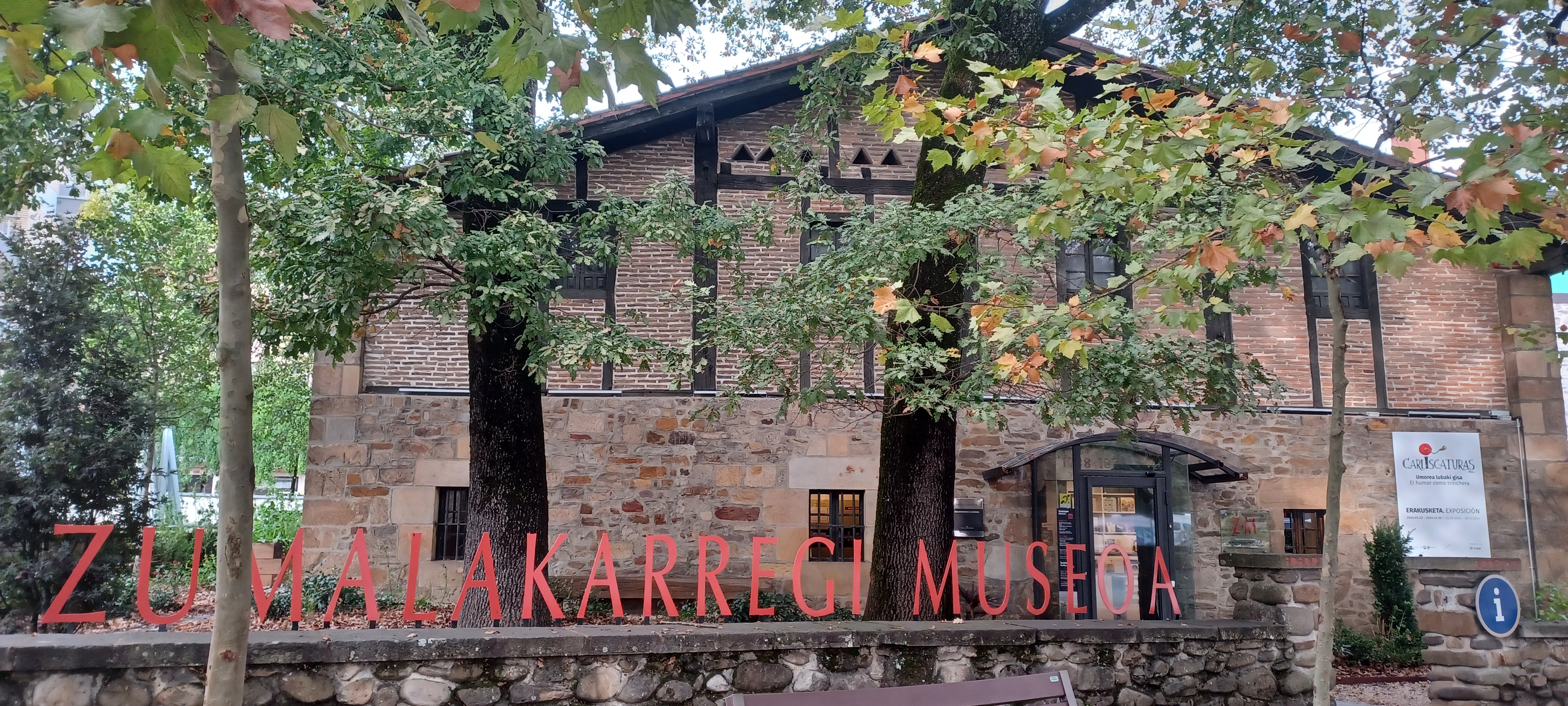
We spent the afternoon at the Museo Zumalakarregi, Don’t you love Basque names?!? The museum, the former home of the Zumalakarregi family, focuses on the history of the region and the remarkable changes that took place during the 19th century, including the Carlist Wars and the industrial revolution. Tomas Zumalakarregi became a famous Carlist general, known as a clever military strategist, while his brother Miguel’s legal education led him to choose the liberal side of the conflict. Not only can the locals pronounce the family name perfectly, but they also learn about them in school. We left feeling a bit overwhelmed but certainly more educated.

We had a fabulous traditional Basque dinner in Beasain (pop. 13,908), the next town over and the administrative center of the district. We enjoyed seeing the townspeople out on a lovely Saturday evening – the bars and restaurants were full.

The hotel’s homemade pastries hit the spot at breakfast and were the perfect impetus to go for a long morning hike in the local hills before returning home. We followed the Via Verde Ormaiztegi-Mutiloa, which tracks the old mining rail lines that were used to ship iron ore out from the mines to the towns below.

The uphill path was steep – and a lot easier for the horses that passed us – but the views were worth it.

It was a fun, mini escape from our “city” life. Perhaps our next short local escape will be to a place that’s easier to pronounce.

Hasta pronto,

Shana & Jeff